
I Knew Her Once
By R. M. Carpus
A dense thicket of towering evergreens fences me in, wet branches looming above my white Jeep Wrangler as I sit at the top of the hill, parked on the circular drive. It took what felt like thirty minutes to drive up here, though it was probably only five. The moist darkness is disorienting. Especially for newcomers. Especially me, a once bronzed, brunette beach bum who spent a bulk of her life in a warm, tropical place. Yet the sight of the layer of fog, which slithers slowly through the sea of rich emerald green, and the barely perceptible mist falling from the night sky, somehow makes the gray stone walkway leading to the front door a welcome relief. The forest wraps me up, an insulated blanket assuring me I belong beneath its canopy of concealed comfort.
I watch the wraithlike rainfall as my grandmother’s voice fills my ear, waiting for a good time to cut the phone call short. I have to go knock on the door and meet the woman who will be my landlady for the next six months, and my arrival is already later than I expected. My lips press together, and I lean fully into the driver’s seat, suppressing the tear in my heart that threatens to break wide open again. I’ve been diligently working to hold the stitches together at the seams. Lucky for me, I’m flat broke, too, so that’s been a fun little distraction from the botched sewing job inside my chest.
“I gotta go, Grandma. I’m sorry. It’s been a long drive. I love and miss you. Tell Grandpa I’ll visit soon, okay? We’ll watch American Graffiti, I promise.”
“Please tell us where you are this time, Rose. Are you on the East Coast at least? Your Aunt Effie’s been asking about you, hon. Everyone’s asking about you.”
“I’m near Boston,” I lie. “I can hop a train and be at your place in a few hours. I just have to finish this one, Grandma. I think this might be the best one yet. I have a good feeling about it, need to focus and get it done.”
“They’re all good, kiddo. Why not try writing one from here for a change, eh?” The metallic flash of the alligator necklace hanging from my rearview mirror sparks my eye. I taste the Gulf of Mexico’s saltwater and smell coconut suntan lotion, feel it glide over my forearms as my skin absorbs the moisture. My golden, sun-kissed highlights shimmer beneath the sun, waves crashing in the distance. Pelican wings flap gently in the hallways of my mind. I bat them away.
“Maybe someday.”
“Do you have enough money, hon? You were in such a hurry, I didn’t have time to—” “Yes, I’m fine. Please don’t worry.” The long silence plucks another piece of thread up from the loose seams. “I already have interviews lined up,” I add, another lie that will be true by tomorrow, if I can get inside and get some sleep so I can start the job hunt early. “I applied to a few places online before I hit the road.”
“Rose.”
“I’m okay, I promise.”
“It wasn’t your fault. I hope you know that, hon. Do you?”
Pop. Another thread unravels.
“Rose, this would’ve happened whether you were down the street or—”
“You’re breaking up a little,” I say, unable to stay on the phone a second longer. “I think it’s the rain, Grandma. There’s a thunderstorm up here. Have some Pica’s pizza for me. I’ll call you later. Love you.” I disconnect and sit up straight to drag in a deep breath.
The stoic Victorian home I found in the for rent classified section of the town’s antiquated gazette stares back at me, its windows a vigilant pair of dimly lit, yellow eyes, studying my hesitation. Ivy smothers nearly every inch of what the ad called Griffin House, reaching up and over the dark gray stone, climbing up the sides of the porch all the way to the very top, where it clings to the attic’s sage green shutters. The rain coerces the vines into a delicate dance, and they lightly tap the shutters’ weathered wood. The sprawling invasion makes my neck itch. I tug at my turtleneck and count the windows, wondering which one will be my bedroom.
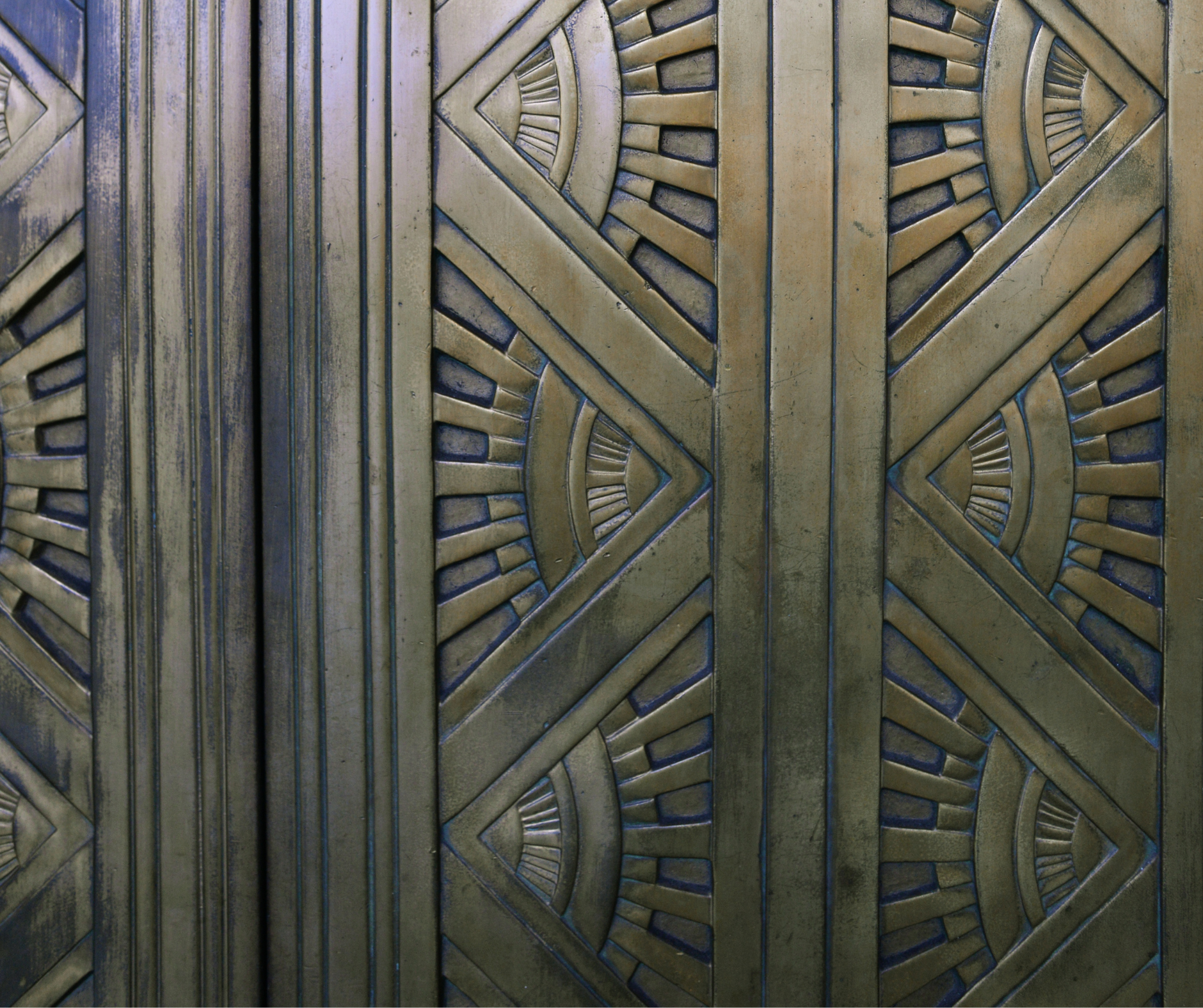
I reach over and collect a single suitcase from the passenger seat, exit the car, and head for the front porch. A formidable woman with long, silky finger wave curls answers the door before I’m able to knock. The silver shine of her locks is dazzling, as eye-catching as the jade Art Deco earrings sparkling on her earlobes. She’s dressed to the nines, dripping with glamor, as if she’s on her way out to a flapper’s 1920’s dinner party.
“Rose,” she says plainly. No trace of a smile, no sign of any piqued interest in me, her new renter. Wrinkles touch the edge of her lips, delicate and smooth.
“Yes. Carmella? Sorry, I know I’m late. Traffic was bad.”
She hands me a tarnished silver key. “Do come in.” Her hand falls from the heavy door handle, and she turns away, waiting for me to follow her into her lair.
I step quietly inside.
“Your bags?” she calls from the end of the stairwell, pausing to face me again. “I can have Vlad collect them for you. He’d be happy to carry them to your room.” Her voice is as smooth as her glossy finger waves, even and unaffected. “Wouldn’t you, Vlad?”
A stately man clad in a black suit and white pinstripe tie floats in from around the corner. His footsteps are so quiet, I wouldn’t have even noticed him emerge from the other room if not for the creak in the floorboards and his tall, intimidating stature, claiming the space beside us.
“Madame,” he greets me, pale-faced and lugubrious. It’s hard to look away from his imposing presence, but I’m equally distracted by the spiral marble stairwell that looms beyond Carmella. It dominates the main foyer, as classy as her hairstyle and dramatic as her dark eyelashes. She is a spellbinding blend of Bette Davis and Katherine Hepburn, and her butler—if that’s what she calls him—is an aloof Bela Lugosi.
I stand there between them, stunned.
“Your bags, Miss Harper?” Carmella repeats, blinking blandly in my direction. “Oh, um. No bags. Just this.” I hold up my French-gray vintage suitcase, with just enough room for a few pairs of clothes, some cherished paperbacks, and basic toiletries. Carmella glances down at the timeworn brass latches, thoroughly unimpressed. “All right, then. Right this way. That’ll be all for now, Vlad.”
I hesitantly but obediently follow her up the stairs, unable to get over the time warp I’ve just walked into. The house is utterly archaic, but in the absolute best sense. It’s well maintained, crawling with photographs of lavish masquerade balls, Egyptian art, and hoards of bizarre trinkets, the kinds nightmares are made of. This place might not be most people’s idea of a good time, but I’ve just stepped through heaven’s glorious, pearly gates. I could live here. Permanently. If permanence existed in my world.
My mind strikes that thought.
Sepia-toned images pepper the floral damask wallpaper all the way up the stairwell, pictures of stylish people posing for family portraits, and those caught in candid, private moments at glitzy soirées of bygone eras. My shadow moves over the photographs as I pass by, playing tricks on my tired eyes. They seem to leak and fill the glass frames, overflowing with the weight of trapped memories. Like Carmella, the house is well preserved, swathed, and cemented in periods of the past. I wonder how she interacts with everyone else in this town, a place cozy and not particularly trendy, but modernized.
When we reach the third floor, a tall grandfather clock with cuckoo pendulum springs to life in the hall, startling me. An instinctive hand reaches to brace the hollow at the base of my throat.
Carmella keeps walking. “If you scare easily, life will be quite difficult for you here.” “I like it,” I say, warily eyeing the contraption. “The clock, I mean.”
She stills and swings around to study me.
“I’m only here for a few months,” I add. “So, I think I can manage.” I try to decode her blank expression, but it’s no use. The woman is a stone, apathetic fortress. “You said you intend to stay a total of six months, correct?”
“Yes, that’s the plan.”
“Because the room is available for a full year, if you’d like.”
“Can I let you know? I’m not sure I’ll need it for that long.”
“I suppose.” She resumes her stride, leading me further down the hall. “What will you do for work?”
“Oh, I’m not sure yet.”
She glances over her shoulder.
“I can pay you the full six months’ worth of rent right now, as I mentioned on the phone.” Not a lie. I have the wad of cash in an envelope in my suitcase. Which represents the very last of my funds and will officially clean me out, not that it’s any of her business. “I have interviews this week.”
A contemplative hum vibrates in her throat, but she doesn’t respond. Her lifestyle leaves me with no impression that money is of any concern to her. I doubt the income from the piddly rent she’s charging me makes a dent in her finances. She slows and guides me through the last door on the left, a heavy, warm wood with carved, beveled edges and a moose-head door knocker, the shiny copper a shock of color against the deep mahogany.
“You’re quite welcome to anything in the wardrobe,” Carmella says, a well-rehearsed hostess presenting the room. “There are also extra quilts stored in the ottoman bench. The fall and winter are very damp here. The chill is unforgiving.”
“Thanks, I appreciate that—” I freeze, balking at the sheer opulence of the massive painting positioned above the canopied four-poster bed. The illustration seems to blur, an incredible illusion that draws my attention immediately. A peasant woman hailing from the Middle Ages, shrouded in a smoke-gray cloak, faces three attackers. The cloak hood is half pulled from her face as she kneels before them. Swords and daggers gleam, their shine a bleeding swirl on the muted oil canvas, pointed just above the woman’s head. The figures are stationed on a ship. Waves rise up, crashing from every direction onto the deck, their consuming presence an imminent threat.
“Carmen Maria Delgado,” Carmella muses, stepping toward the painting. “A stowaway fleeing Griffin Bay for a crime she didn’t commit.”
“This is real?” I point weakly, fixated on the woman’s face. Only partially revealed, it’s impossible to miss the strain along her jawline, the anguish blooming around the creases of her cheekbones.
Carmella swishes her wrist and lifts her long bell sleeve, adjusting her dress so it doesn’t skim needlessly on the floor as she moves closer to the canvas. The Tiffany lamp on the bedside table sends a soft glow traveling over the bridge of her nose. “Oh, yes. She lost her life on that ship.”
“What was the crime?”
“Some say arson, that she burned down the schoolhouse. Others say public blasphemy. Sailors claim she desecrated a grave in Willow Hill Cemetery.”
Mouth agape, I shiver. “Sounds like a real sweetheart.”
Carmella’s eyes flicker my way. “She was innocent. But people must have their justice, so they get creative.”
A coolness skates over my shoulder blades and my fingers clam up around my suitcase handle. “How did she die?”
“By the sword and the sea.”
I blink, breaking myself from the momentary trance. “Can I see the other rooms?” “I beg your pardon?”
I take a hesitant step away from the four-poster bed. Creepy clocks and grim butlers lurking in the shadows I can handle. This room is something else. “This is a large house. I noticed there are plenty of other rooms. Are they all vacant?”
“This is the only available room. The others are accounted for.”
“Oh, of course.” I nod, feeling my face blush. “I’m not the only renter.”
“You are at the moment.” Carmella starts for the bedroom door. “Is there a problem?”
In my peripheral vision, Carmen’s cloak flutters in the sea’s stormy winds, flapping like the pelican wings inside my skull. “No,” I swallow, turning to face Carmella in the doorway. “Thought I felt a little draft, that’s all.”
“This is the only room I rent. I’m retiring for the evening. If the space isn’t to your satisfaction, then feel free to stay the night and look elsewhere in the morning.” My throat clears, and I gently set the suitcase down. “I’ll make due. Thanks.” “Very well. Good night.” Carmella vanishes, leaving the bedroom door wide open. I walk over to close it behind her, exhaling as I turn the lock.
My ringtone jingles, and I jump, cursing beneath my breath. I scramble to find the burner phone buried in my jeans pocket. When I flip it open, I don’t see my grandparents’ area code on the outdated screen—the only people I gave this new number to before I left the northeast. They swore they’d keep it private, and they’d never betray that promise.
I answer the call but don’t speak.
“Rose? Hello? Is that you?” A voice drifts through the line, and I let my weight fall against the bedroom door.
“Who is this?”
“You know who I am.”
“How did you get this number?”
“If you hang up, I’ll make sure everyone you know back home gets this number.” My fingers curl around the cheap black plastic. I flip the phone shut, turn the ringer on silent, and turn the bedroom door lock. Sneaking out into the hall, I fly down the stairwell and out onto the porch, yanking the key fob from my back pocket. I chuck the phone onto the ground in front of the left driver’s side tire and hop into the Jeep. The engine purrs to life, and I drive forward, then back up for good measure, satisfied when I sense a slight crunch beneath the rubber.

About I Knew HEr Once
Rose tried to leave her past behind her, but when she arrived in Griffin Bay, it came back to haunt her.
Now the secrets and the lies of her new hometown drag her into a web of twisted romance, friends who can’t be trusted, and ghosts who want revenge.
If you love Gothic horror and suspense mixed with dark romance, I Knew Her Once is the book for you!
What You’ll Find Inside
The grim, dry humor of The Addams Family and Netflix’s Wednesday
The spooky atmosphere of films like What Lies Beneath and Crimson Peak
The mystery and suspense of Riley Sager's The Only One Left, Daphne du Maurier's Rebecca, and Shirley Jackson's We Have Always Lived in the Castle
Classic horror
'90s alternative
Societal outcasts
New girl in town
Unhinged writers
Betrayal
Generational trauma/cycle breakers/curse breakers
Forbidden romance
Keep your friends close
Small town secrets
Creepy house on a hill
If these walls could talk